


2021
Women and Gender in International Development Conference 2021
Keynote Speakers

Gender Transformative Food Systems: Addressing structural and institutional barriers to gender equality in food systems
Dr. Jemimah Njuki, Africa Director for the International Food Policy Research Institute (IFPRI) and custodian for Gender Equality and Women's Empowerment for the UN Food Systems Summit 2021
Bio: Dr. Jemimah Njuki is a globally renowned gender and agriculture expert. For the last 18 years she has carried out gender research, managed women’s economic empowerment programs in Africa and Asia, and trained researchers, NGO staff, and extension officers on gender equality. Previously, she led the Growth and Economic Opportunities (GrOW) program at Canada’s International Development Research Centre (IDRC) and served as Senior Program Specialist in the Agriculture and Food Security program at IDRC. In November 2020, Dr. Njuki was co-convener of the virtual Gender Summit on “Agriculture through the Gender Lens: From Surviving to Thriving in a Climate Changing World,” is convener of the East Africa Gender and Livelihood Network, and has been the chair of the Women in Agriculture Thematic Working Group of the African Green Revolution Forum for the last 6 years.
Prior to joining IDRC, she led the Women in Agriculture program at CARE USA. She also led the Poverty, Gender, and Impact program at the International Livestock Research Institute, and between 2003 and 2009, managed a multi-country program called Enabling Rural Innovation at the International Centre for Tropical Agriculture. Currently, Dr. Njuki is deputy chair of the Advisory Committee of African Women in Agriculture Research and Development (AWARD). She also serves as advisor on Women’s Economic Empowerment to the UN Women Regional Office for Eastern and Southern Africa and is the Custodian for Gender Equality and Women’s Empowerment for the UN Food Systems Summit 2021. Dr. Njuki is the founding and current Editor of the Journal of Gender, Agriculture, and Food Security and has co-edited three books on gender and agriculture in the global south. She also writes and publishes widely in local and international media including Ms. Magazine, Thomson Reuters, and others on issues concerning women and girls. Articles can be accessed on https://medium.com/me/stories/public
Within agriculture and food systems research, gender analytical frameworks have been instrumental in understanding key aspects of gender inequality including differences in access to resources, the gender division of labor, and even gaps in agriculture productivity. They have aided in the development of programs that seek to close these gender gaps. A key shortcoming however has been that these tools and framework have fallen short in terms of understanding and addressing the underlying causes of gender inequality. In this presentation, I talk about three key elements that we need to consider in gender and food systems research to addresses these gaps. The first is the need to use gender transformative approaches that focus on the formal and inform, the individual and the systemic causes of inequality and to do this at multiple levels -individual, interpersonal, organizational, community and public policy. Second to conceptualize and measure empowerment in a meaningful way, beyond reaching and benefiting women and finally, to take an intersectional approach in the way we address gender inequality, understanding that multiple identities can lead to overlapping or compounding marginalization and identities. The presentation concludes with some reflection on how we can do this in a practical way within food systems research.

Feminist Food Justice: Overcoming Intersectional Inequities in U.S. and International Food Systems
Dr. Carolyn E. Sachs, Professor Emerita of Rural Sociology and Women’s, Gender, and Sexuality Studies at Pennsylvania State University
Bio: Carolyn Sachs is Emerita Professor of Rural Sociology and Women’s, Gender, and Sexuality Studies at Penn State University. Her research focuses on gender and agriculture and gender and environment. She has conducted research and outreach on gender and agriculture in the U.S., Honduras, India, Sri Lanka, Bangladesh, Swaziland, Kenya, Egypt, and Peru. Recently, she has been involved with her GEARE colleagues at Penn State in conducting gender trainings with CGIAR post-docs and with other researchers in Honduras, Ghana, Ethiopia, and at Oxfam. Her most recent books include, The Routledge Gender and Agriculture Handbook, 2021, edited with Leif Jensen, Paige Castellanos, and Kathleen Sexsmith. She is also currently involved with Paige Castellanos and Ann Tickamyer in writing a blog on Gender, Food, Agriculture, and Coronovirus. With her colleagues, she has a forthcoming book with Routledge: Gender, Food, and Coronoavirus: Stories of Hope and Harm which will be available with free open access and should be published this summer.
Feminist food justice provides a conceptual framework for linking gender and agriculture researchers and practitioners in the U.S. and internationally. Feminist food justice builds on the food sovereignty and food justice movements and aims to overcome intersectional inequities in the food system. This framework emphasizes three strategies including: supporting food production at multiple scales, revaluing food work that feeds families, and providing good food for all. I will then discuss how lessons learned about gender, food, and agriculture during the global coronavirus pandemic in the U.S. and internationally provide new insights and strategies for overcoming intersectional inequalities in our food systems.
WGD Discussion Series Fall 2021

“Women, water, and transformative gender research”
Dr. Mary Rodriguez, Associate Professor of Community Leadership and Development, The Ohio State University, Nov. 18, 2021
Bio: Mary Rodriguez is an associate professor of community leadership and development at The Ohio State University. As a leadership scholar and practitioner, she focuses on supporting communities in change processes at the individual, household, and community levels. She strives to develop research-based solutions to build more sustainable and resilient communities through the exploration of behavior change and leadership development. In the US, through community engaged scholarship, she has worked with New American populations investigating the social system’s impact on access to resources. She has also worked internationally in Latin America, the Caribbean, Sub-Saharan Africa, and the Middle East investigating adoption of innovations, household food security and resilience, and governance of water systems.
Abstract: Woman around the world are primarily responsible to provide water for the household. They can walk up to several hours a day to fetch water. How does bringing water to a community through the use of boreholes and/or piped water schemes impact the lives of women? How do women engage with water provision schemes in their communities? What challenges do they face in paying for water for their many household needs? Through the use of gender transformative research, we can explore this questions and more.
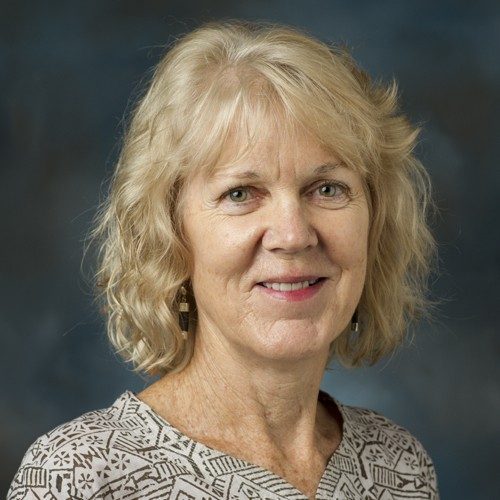
“Engaging men in supporting maternal and child consumption of milk and other animal source foods in Rwanda”
Dr. Kathy Colverson, Associate Research Scientist, University of Florida’s Animal Science Department and Institute of Food and Agricultural Sciences, Oct. 21, 2021
Bio: Dr. Kathy Colverson is an Associate Research Scientist with the University of Florida’s Animal Science Department and Institute of Food and Agricultural Sciences (IFAS). Dr. Colverson also serves as Senior Gender Specialist for the USAID-funded Feed the Future Innovation Lab for Livestock Systems and has over 30 years of experience with gender analysis, assessments, publications and evaluations in east Africa, Central America, Caribbean, Middle East, Southeast Asia and the United States. In addition, she has over 25 years of experience working with small and limited resource farmers and communities to create sustainable practices in production, marketing, food safety and gender equitable project planning with an emphasis on livestock production and value chain development. Currently, Colverson is also a CO-PI on an ongoing DFID-IDRC funded agricultural research for development program - “Advancing women's participation in livestock vaccine value chains in Nepal, Senegal and Uganda” and previously was a CO-PI on the USAID-funded Integrating Gender and Nutrition into Agricultural Extension Systems (INGENAES). Prior to her current role at the University of Florida, Dr. Colverson was a Senior Social Scientist for the International Livestock Research Institute (ILRI) where she led research on livelihoods, gender, impact and innovation systems.
Abstract: Maternal and child nutrition practices, including consumption of milk and animal source foods, are considered the responsibility of women in many low- and middle-income countries. However, men can influence nutrition in their households through their decision-making, control of resources, and social support. Despite the role of gender and the importance of men in influencing nutrition in their households, most nutrition programs target women and men are not comfortable participating.
This ongoing project funded by the Livestock Systems Innovation Lab project is exploring methods of engaging men more actively in household nutrition through a combination of training and communication materials tailored to meet their needs. Training materials were developed after extensive field research with men and women using focus groups and key informant interviews. These materials were used to train local partners on providing nutrition education to men, and assess the effectiveness of changes in household nutrition before and after the training. Due to COVID-19 restrictions, the final results are pending, but should be available by the conference. The implications of this research could improve overall household nutrition, particularly as it relates to consumption of animal source foods by women and children.
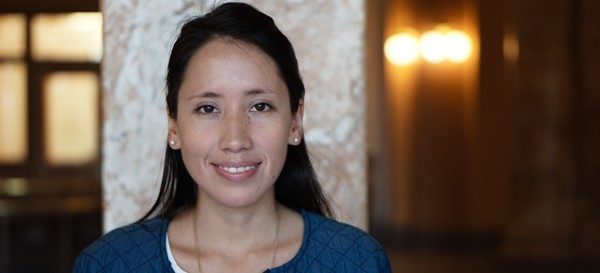
“Gender and Decision-Making: Quinoa Production Among Indigenous Women in Rural Ecuador”
Elisa Cárdenas, Research Specialist, University of Missouri in the Center for Applied Research and Engagement Systems, Sept. 16, 2021
Bio: Elisa Cárdenas graduated from Iowa State University with a Ph.D. in Sustainable Agriculture and Sociology and with a certificate in Geographic Information Systems. She works at the University of Missouri in the Center for Applied and Engagement Systems (CARES) as a Research Specialist. Her research focuses on international development mostly related to women’s empowerment, gender inequality, Indigenous marginalization, and intersectionality.
Abstract: Women’s empowerment can be analyzed in agriculture through their ability to make choices that align with their life goals. Household farm decision-making is often examined as an individual or a jointly made choice, both frequently described as empowering in quantitative studies as women participate in agricultural decisions. However, empowerment is contextual and often difficult to measure and, thus, a qualitative methodology (focus groups and interviews) can better illuminate how joint decision-making processes occur to investigate women’s empowerment. This research asks: how is decision-making among Indigenous women influenced by their gender when producing quinoa in rural Ecuador? The findings include a feminization of agriculture among the participants, in which Indigenous women have become in charge of quinoa production, a traditionally male-dominated crop, due to Indigenous men’s absence in the farm. Furthermore, the participants described decision-making as jointly made, but men had greater authority, which was influenced by their religious beliefs, and men often made final decisions even when they had little or no participation in the farm work. Overall, women’s participation in quinoa production increased, but because the participants associated men as heads of household, women’s decision-making power was still limited even as they have become principal farmers. This study contributes to the literature of decision-making and demonstrates the importance of contextual characteristics, such as the feminization of agriculture, that influence decision-making processes. Overall, Indigenous women farmers are limited by patriarchal norms in their decision-making opportunities and overall empowerment.